Best Nootropics for Memory in Japan 2026
Memory is the use case where Japan's regulatory landscape and the global nootropics evidence base intersect most directly. Domestic brands target this use case too: FANCL BRAINs is notified under Japan's Food with Function Claims system administered by the Consumer Affairs Agency (CAA, 消費者庁; notification G425), while no FFC notification was found for Suntory DHA & EPA + Sesamin EX in the CAA database (export scanned 2026-10-06). They target middle-aged and older adults via DHA (Suntory) and bacopa saponins plus matured hop bitter acids (FANCL). Imported international stacks add the Bacopa and Lion's Mane evidence base — including Mori et al. 2009, the foundational Lion's Mane RCT conducted in Japan.
What the evidence actually says
For each ingredient below, we link directly to the peer-reviewed source. Ingredient mechanism is not the same as product efficacy — a product can include the right ingredient at the wrong dose.
Bacopa Monnieri
The most-replicated memory ingredient in nootropics. Multiple double-blind RCTs in adults show improved memory consolidation and recall after 8–12 weeks at 300mg standardized to 50% bacosides. Onset is slow — daily for 8+ weeks. In Japan, bacopa saponins (バコパサポニン) are one of the two notified functional ingredients in FANCL BRAINs (Foods with Function Claims notification G425, 15 mg per 4 tablets; Consumer Affairs Agency database, checked 2026-10-06).
Source →Lion's Mane (Hericium erinaceus / ヤマブシタケ)
Modulates Nerve Growth Factor (NGF) and may support neurogenesis. Mori et al. 2009 — a small RCT in older Japanese adults with mild cognitive impairment — showed memory improvements at 1g/day fruiting-body extract over 16 weeks. The Lion's Mane evidence base is uniquely Japanese in origin. Look for fruiting-body extract, not mycelium-on-grain.
Source →DHA (Docosahexaenoic Acid) — FFC-notified in Japan
DHA is the most-notified functional ingredient under Japan's FFC system, with claims around memory support in middle-aged and older adults. The brain is approximately 60% fat by dry weight and DHA is its primary structural omega-3. The positive memory trials we reviewed used 900mg–1.2g DHA/day for 24 weeks or longer (see our DHA ingredient page). Suntory and FANCL are the dominant Japanese DHA brands.
Source →Phosphatidylserine (PS)
Phospholipid component of brain cell membranes. The FDA permits a qualified health claim for PS supporting cognitive function in elderly adults. Most RCT evidence is in 50–80-year-olds at 100–300mg/day. The trial linked below (Vakhapova et al. 2010) is not the basis of the FDA claim: in an exploratory 15-week RCT of 157 non-demented older adults with memory complaints, PS-DHA improved immediate verbal recall versus placebo. Used in Mind Lab Pro (100mg Sharp-PS).
Source →Our picks for memory
Ranked by how well each product matches the evidence above + our 5-pillar editorial audit.
広告(アフィリエイト)本ページのリンクから商品を購入されると、当サイトは紹介料を受け取ります(お客様の追加負担はありません)。 スコアと順位は公開している評価方法に基づいて決定しており、紹介料の影響は受けません。 評価方法を読む
Mind Lab Pro
Why it's here: Includes Bacopa, citicoline (250mg Cognizin at clinical dose), AND phosphatidylserine — three of the four memory-evidence ingredients in one open formula. Bacopa dose is 150mg (under the 300mg clinical anchor) so consider stacking with a separate Bacopa supplement for full effect. Ships from the UK to Japan in 5–20 working days by tracked airmail or 2–7 working days by DHL courier (per mindlabpro.com, checked 2026-09-29).
Also considered — below our 7.0 bar
Products audited for this guide that score below the 7.0/10 a ranked pick needs in our 5-pillar editorial audit. Listed for transparency, not ranked or recommended.
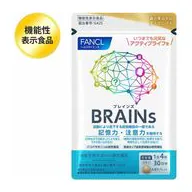
FANCL BRAINs
FANCL · Scores 5.1/10 — below our 7.0 bar
The leading Japanese domestic option: FFC-notified (機能性表示食品) with cognitive claims filed with the Consumer Affairs Agency (消費者庁). Its notified functional ingredients are bacopa saponins (15mg, memory) and matured hop bitter acids (35mg, attention), per FANCL's notification G425. Sold through FANCL's official Rakuten store, labelled 機能性表示食品. No customs risk, Japanese-language label, ¥5,479 per 30-day bag (list price on fancl.co.jp).
Read full review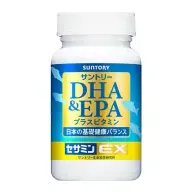
Suntory DHA & EPA + Sesamin EX
Suntory · Scores 5.0/10 — below our 7.0 bar
An omega-3 brain supplement whose maker's product page calls it 「DHAサプリメント市場18年連続売上No.1」 (No. 1 in DHA-supplement sales for 18 years running; suntory-kenko.com, checked 2026-10-09); no Foods with Function Claims (FFC, 機能性表示食品) notification found in the Consumer Affairs Agency (CAA) database (export scanned 2026-10-06). 300mg DHA + 100mg EPA + 10mg sesamin per 4 capsules from Suntory Wellness — backed by a household-name conglomerate familiar to every Japanese consumer. Foundational rather than acute: works by maintaining structural membrane integrity. Best paired with a dedicated nootropic stack like Mind Lab Pro for users wanting both. ¥4,800/month.
Read full review
Frequently asked questions
What is the difference between FFC-notified domestic brands and imported stacks?
Japan's Food with Function Claims system (機能性表示食品) requires manufacturers to notify the Consumer Affairs Agency (消費者庁) of the cognitive claim and supporting evidence — a regulatory framework that domestic brands like FANCL BRAINs and Suntory DHA & EPA + Sesamin EX operate under. Imported stacks such as Mind Lab Pro ship under Ministry of Health, Labour and Welfare (MHLW) personal-import rules and carry no Japanese cognitive claim. Both routes are legal; FFC products are easier to buy in pharmacy chains and have Japanese-language labels.
What is the most evidence-backed nootropic for memory?
Bacopa Monnieri at 300mg standardized to 50% bacosides has the most replicated RCT evidence for memory consolidation in healthy adults. On this page it comes in an imported stack (Mind Lab Pro, 150mg Bacopa) and in FANCL BRAINs, a domestic FFC product whose notified ingredient is bacopa saponins (15mg per daily intake, notification G425). For Japan-domestic options, DHA is the most-notified FFC ingredient with strong evidence in middle-aged and older adults; Phosphatidylserine has the FDA qualified health claim for cognitive function in elderly.
How long until memory nootropics work?
Bacopa: 8–12 weeks of daily use. Lion's Mane: 8–16 weeks. DHA, Phosphatidylserine, citicoline: 4–12 weeks. None of these are acute-effect ingredients. Plan for at least 8 weeks of consistent dosing before judging.
Where can I buy these in Japan?
FANCL BRAINs: FANCL's official Rakuten store, where it is labelled 機能性表示食品 (notification G425). Mind Lab Pro: ships directly from the UK to Japan via the manufacturer website (5–20 working days by tracked airmail or 2–7 working days by DHL courier, per mindlabpro.com, checked 2026-09-29).
Will Bacopa make me feel anything?
No. Bacopa is not an acute-effect ingredient. It is a classic case of "you only know it worked when you stop and notice the regression." This makes it psychologically harder to stick with than acute-effect ingredients (caffeine, L-theanine) — but the cumulative memory benefit at 8–12 weeks is the most replicated finding in nootropics.
Lion's Mane: fruiting body or mycelium?
Fruiting body. Most clinical research uses fruiting-body extract — including the original Mori et al. 2009 study conducted in Japan. Mycelium-on-grain products contain a high percentage of grain (oats, brown rice) by weight and lower beta-glucan content. Read labels carefully and prefer products that disclose β-glucan percentage and use the fruiting body (子実体).
Related guides
How we choose
Every pick must (a) include at least one ingredient with peer-reviewed evidence for the use case, (b) dose that ingredient at or near the clinical-trial dose, and (c) score ≥ 7.0/10 in our 5-pillar editorial audit. Read our full methodology.
← Back to Best Nootropics 2026