Best Nootropics for Aging Brain in Japan 2026
Japan's median age, 49.4 years in 2024, is the highest of any country or area with at least a million people (UN World Population Prospects 2024), and 563 of the 6,451 active Foods with Function Claims (FFC, 機能性表示食品) notifications make a claim about memory or cognitive function (Consumer Affairs Agency database export, 2026-10-06). Domestic brands target this demographic via DHA (Suntory DHA & EPA + Sesamin EX; no FFC notification found in the Consumer Affairs Agency (CAA) database, export scanned 2026-10-06) and bacopa saponins plus matured hop bitter acids (FANCL BRAINs, FFC notification G425). International stacks add Lion's Mane (the evidence base established in Japan via Mori et al. 2009) and clinical-dose citicoline. Some of these supplements have trial evidence in older adults, often only in subgroups: PS-DHA in older adults with memory complaints, citicoline in those with relatively inefficient memories, and Lion's Mane in mild cognitive impairment. They are NOT treatments for dementia (認知症), Alzheimer's, or any clinical cognitive disease. For those, see a Japanese neurologist.
What the evidence actually says
For each ingredient below, we link directly to the peer-reviewed source. Ingredient mechanism is not the same as product efficacy — a product can include the right ingredient at the wrong dose.
DHA — an FFC-notified ingredient for memory and cognition
By our count of the Consumer Affairs Agency's FFC database (export of 2026-10-06), DHA is listed as a functional ingredient in 105 of the 563 active Foods with Function Claims (FFC) notifications whose claim mentions memory or cognitive function. The positive memory trials we reviewed used 900mg–1.2g DHA/day for 24 weeks or longer; the trial in adults aged 55 and over used 900mg/day.
Source →Our DHA (Omega-3) pagePhosphatidylserine (PS) — FDA qualified health claim
The FDA allows phosphatidylserine only qualified claims that it 'may reduce the risk of dementia' or 'cognitive dysfunction in the elderly', each followed by 'FDA concludes that there is little scientific evidence supporting this claim' (FDA letter, 13 May 2003). RCTs in older adults at 100–300mg a day report memory benefits, though often only in subgroups. The trial linked below (Vakhapova et al. 2010) is not the basis of the FDA claim: in an exploratory 15-week RCT of 157 non-demented older adults with memory complaints, PS-DHA improved immediate verbal recall versus placebo. Used in international Mind Lab Pro (100mg Sharp-PS).
Source →Our Phosphatidylserine pageLion's Mane (ヤマブシタケ)
Mori et al. 2009 — a foundational small RCT in Japanese adults aged 50–80 with mild cognitive impairment. 3g/day over 16 weeks improved cognitive function scores compared with placebo. The Lion's Mane evidence base for aging brains was established in Japan; evidence is promising for early age-related changes but is not a dementia treatment.
Source →Our Lion's Mane pageCiticoline (CDP-Choline) — older-adult memory
In one trial in adults aged 50–85 (Spiers 1996, PubMed 8624220), 1,000mg a day for 3 months improved delayed recall only in those with relatively inefficient memories, and in a follow-up crossover of 32 of those participants, 2,000mg a day for 2 months improved immediate and delayed recall. Cognizin is a standardized form used in Mind Lab Pro.
Source →Our Citicoline (CDP-Choline) pageOur picks for aging
Ranked by how well each product matches the evidence above + our 5-pillar editorial audit.
Affiliate disclosureWe earn a commission if you buy through links on this page, at no extra cost to you. Our scores and rankings follow our published methodology; commissions do not influence them. Read our methodology
Mind Lab Pro
Why it's here: Includes phosphatidylserine, citicoline (250mg Cognizin at clinical dose), Bacopa, and Lion's Mane (the ingredient with Japanese RCT evidence) in one open-formula product. Caffeine-free — no cardiovascular load for older adults sensitive to stimulants. Best for Japanese adults already comfortable with international online ordering and willing to pay in US dollars for broader ingredient coverage.
Also considered — below our 7.0 bar
Products audited for this guide that score below the 7.0/10 a ranked pick needs in our 5-pillar editorial audit. Listed for transparency, not ranked or recommended.
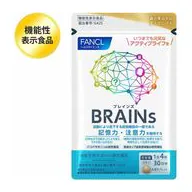
FANCL BRAINs
FANCL · Scores 5.1/10 — below our 7.0 bar
A domestic Japanese product, FFC-notified (機能性表示食品) with cognitive claims filed with the Consumer Affairs Agency. Its notified functional ingredients are bacopa saponins (15mg, age-related memory) and matured hop bitter acids (35mg, age-related attention), per FANCL's notification G425 — in one Japanese-language-labelled product. Sold through FANCL's official Rakuten store, labelled 機能性表示食品. ¥5,479 per 30-day bag (list price on fancl.co.jp).
Read full review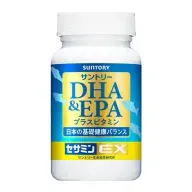
Suntory DHA & EPA + Sesamin EX
Suntory · Scores 5.0/10 — below our 7.0 bar
An omega-3 brain supplement with no Foods with Function Claims (FFC, 機能性表示食品) notification found in the Consumer Affairs Agency (CAA) database (export scanned 2026-10-06) — Suntory Wellness, a household name backed by the ¥2.7 trillion Suntory Group. 300mg DHA + 100mg EPA + 10mg sesamin per 4 capsules. Foundational structural support for aging brains.
Read full review
Frequently asked questions
Will these prevent dementia (認知症) or Alzheimer's?
No. No supplement — Japanese FFC-notified or otherwise — is approved to prevent or treat dementia (認知症) or Alzheimer's disease. The ingredients on this page have evidence for age-related cognitive support in healthy older adults, distinct from disease prevention. If you or a family member is experiencing significant memory changes, see a Japanese neurologist (神経内科) for evaluation. The Ministry of Health, Labour and Welfare (MHLW) Long-Term Care Insurance system (介護保険) provides screening and support resources.
What does FFC notification (機能性表示食品) actually mean?
Japan's Food with Function Claims system requires manufacturers to notify the Consumer Affairs Agency (CAA, 消費者庁) of the cognitive claim and the supporting evidence. The CAA describes it as a system in which a business notifies the CAA Commissioner before sale of the scientific evidence for safety and function, and states that, unlike Foods for Specified Health Uses (FOSHU, トクホ), 「国が審査を行いません」 (the government does not review the notification) (caa.go.jp, checked 2026-10-06). It is more rigorous than US "structure-function claims" but less than the EU's health-claim authorization system. FANCL BRAINs is notified (G425, confirmed in the CAA database on 2026-10-06); no FFC notification was found for Suntory DHA & EPA + Sesamin EX in the CAA database (export scanned 2026-10-06). The notification reflects the manufacturer's own evidence, not a government evaluation, and is not a disease-prevention promise.
When should I start taking these?
Some of the supplements on this page have trial evidence in older adults, often only in subgroups: PS-DHA in older adults with memory complaints (もの忘れの自覚), citicoline in those with relatively inefficient memories, and Lion's Mane in mild cognitive impairment. There is no benefit shown to starting in your 30s or 40s purely as "prevention." Talk with your kakaritsuke-i (かかりつけ医) about cognitive concerns before starting any supplement, especially if you take prescription medications.
Are these safe alongside Japanese prescription medications?
Generally yes for the ingredients on this page, but talk to your prescribing doctor. Bacopa and Lion's Mane have minimal known drug interactions. Phosphatidylserine derived from soy could interact with warfarin/anticoagulant regimens; sunflower-derived PS is the alternative. For older adults on multiple medications, bring the supplement label to your next pharmacist (薬剤師) consultation — Japanese pharmacy chains offer this service free.
I take a cholinesterase inhibitor (donepezil / アリセプト). Should I avoid certain ingredients?
Yes — discuss with your neurologist. Huperzine A is itself an acetylcholinesterase inhibitor and stacking with donepezil (アリセプト) is not advised. None of the products above contain Huperzine A. Citicoline is a different mechanism (choline donor) and is sometimes used alongside cholinesterase inhibitors under clinician supervision, but combine only with medical input.
Where can my elderly parents buy these in Japan?
FANCL BRAINs is sold through FANCL's official Rakuten store, where it is labelled 機能性表示食品 (notification G425). Mind Lab Pro requires ordering from an international website with English checkout — typically a barrier for older buyers without English proficiency. The domestic options are easier for this demographic to buy, but both score below our bar for ranked picks (listed under Also considered above); Mind Lab Pro, the ranked pick, is the route if a younger family member can manage the international order.
Related guides
How we choose
Every pick must (a) include at least one ingredient with peer-reviewed evidence for the use case, (b) dose that ingredient at or near the clinical-trial dose, and (c) score ≥ 7.0/10 in our 5-pillar editorial audit. Read our full methodology.
← Back to Best Nootropics 2026